

Written by Vivian老师 from GoEast Mandarin.
A basic introduction to 呀 (ya)
Chinese words are divided into many categories and can have several different usages at the same time.
呀 (ya), which we are going to cover here, can be an interjection, like 啊 (a), 喂 (wei), 诶 (ei). Such interjections can express emotions such as exclamation.
Read more articles about interjections.
Words can also be onomatopoeic; these are words that mimic a sound. For example, in English, you say ‘tik-tok’ to describe the sound of a clock. In Chinese, 咣 (guāng) 哗啦啦 (huā lā lā) and other words can simulate a sound, can make the language more specific, and create vivid imagery. 呀 (ya) can also be used like this.
Some characters are modal particles, such as 啊 (a). 呀 (ya) also falls into this category when influenced by the phonemes ‘a, o, e, i, and ü’.
So let’s learn this multi-functional word together!
The Chinese Character 呀 (ya)
呀 (ya) is a pictophonetic character divided into left and right parts. It consists of 口 (kǒu) 👄 and 牙 (yá) 🦷.


Source: Wiktionary – Animated Character project – VisualMandarin – Yellowbridge., CC BY 3.0.
口 (kǒu) means ‘mouth,’ which indicates that the sound relates to the mouth and is the ideographic part of 呀 (ya). The right side of 呀 (ya) reveals how the character should be pronounced based on 牙 (yá).
So when we say 呀 (ya) out loud, we need to open our mouths and show our teeth. Like this:


How is the Chinese Character 呀 (ya) used?
1. The onomatopoeia usage of 呀 (ya)
You may or may not be familiar with 呀 (ya) as onomatopoeia. This sound simulates the sound of friction and rotation and has the yā pronunciation.
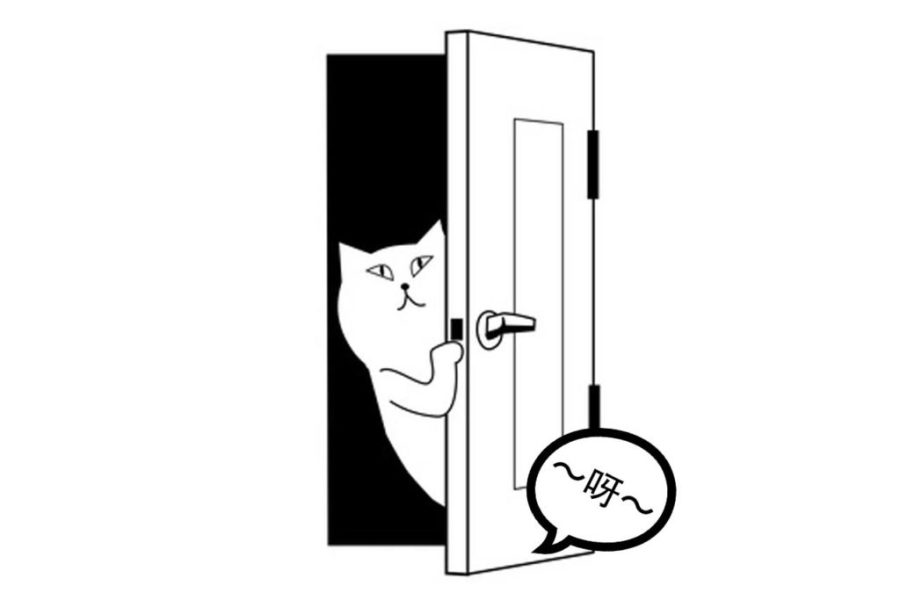
Example sentence:
If you go to an old house, you will hear the sound of friction and rotation of the door or the window when you open the door or a window.
You might say:
老房子的窗户呀的一声打开了。(lǎo fángzi de chuānghu yā de yì shēng dǎkāi le.) The window of the old house creaked open.
2. 呀 (ya) as an interjection
When 呀 (ya) is an interjection, it is read as “yā” to express exclamation.

Example sentence:
When you suddenly hear that your good friend is going to get married, you may say:
呀!你要结婚了!真好!(yā!nǐ yào jiéhūn le!zhēn hǎo!) Oh! You’re getting married! Splendid!
3. 呀 (ya) as a modal particle
We pronounce 呀 (ya) with the 5th tone ‘ya’ when it is a modal particle. This is because the modal particle 啊 (a) is affected by the letters a, e, i, o, and ü of the previous word. Therefore, it is usually found at the end of a sentence.

Example sentence:
If you want to invite your friends for dinner, you can say:
你们快来呀!我等你们!(nǐmen kuài lái ya!wǒ děng nǐmen!) Come on! I’ll wait for you!
Learn more about modal particles.
Another really common interjection in China is 啊呀!ā yā, a filler-phrase that means “Oh my!”
Okay! These are some uses of 呀 (ya). Have you learned them all?
This guide is written by Vivian老师 from GoEast Mandarin. GoEast is an online Chinese language school that combines online self-learning materials with live classes from professional Chinese teachers.
Mention “WrittenChinese” when purchasing a course at GoEast Mandarin and you get a free Business Chinese Course for free (either Elementary or Intermediate Level) worth $69-99.