
If you are new to Chinese characters and want a place to start, you’re at the right place. Our 150 most common Chinese characters list will help you get started on your journey.
MIT (Massachusetts Institute of Technology) created an algorithm that calculated the most often seen Chinese characters in written Chinese in order of how frequently they are used.
This post may include affiliate links. That means if you click a product link below and then purchase a product, Written Chinese will take a small commission to keep the site and dictionary running. (Don’t worry, it’s at no extra cost to you!)
Chinese Characters, a Quick Overview
There are tens of thousands of Chinese characters, but since the symbols that make up written Chinese has developed over thousands of year, the exact number is unknown. In 2004, the 异体字字典 (yì tǐ zì zì diǎn) Chinese Dictionary included a record 106,230 Chinese characters, but only a small amount of those are used today.
In modern-day schools, children are expected to learn 3500 characters, but many know more than 5000 by the time they graduate. In mainland China, students learn simplified characters, while traditional Chinese characters are used in Taiwan, Hong Kong, and Macao.
Difference Between Characters and Words
One character doesn’t make one Chinese word. A word is usually made up of 2 or more characters, so learning these 150 characters means you actually know many more words.
For example, in #11 in this Chinese character list, 这 can be combined with several other characters in the list to make words. For example, 这个, 这里, 这样, 这么, and 这些.
If you’ve looked at the new HSK 2021 system, over 9 levels, you’ll study 3000 characters which equate to 11092 words.
You can download our Chinese character list as a PDF and excel spreadsheet so you can study later and record your learning. We’ll also send you some tips and instructions on how to start learning.
150 Most Common Chinese Characters
| No. | Simplified Character | Pinyin | English |
|---|---|---|---|
| 1 | 的 | de | of |
| 2 | 一 | yī | one |
| 3 | 是 | shì | to be |
| 4 | 不 | bù | not |
| 5 | 了 | le | completed |
| 6 | 在 | zài | at / in |
| 7 | 人 | rén | person |
| 8 | 有 | yǒu | to have |
| 9 | 我 | wǒ | I / me |
| 10 | 他 | tā | he / him |
| 11 | 这 | zhè | this |
| 12 | 个 | gè | individual |
| 13 | 中 | zhōng | middle |
| 14 | 为 | wèi | for |
| 15 | 大 | dà | big |
| 16 | 们 | men | plural |
| 17 | 来 | lái | come |
| 18 | 上 | shàng | above / up |
| 19 | 以 | yǐ | so as to |
| 20 | 国 | guó | country |
| 21 | 和 | hé | and / with |
| 22 | 到 | dào | to arrive |
| 23 | 地 | dì | earth |
| 24 | 之 | zhī | of / it |
| 25 | 说 | shuō | to say |
| 26 | 时 | shí | time |
| 27 | 要 | yào | want |
| 28 | 出 | chū | out |
| 29 | 也 | yě | also |
| 30 | 就 | jiù | just |
| 31 | 可 | kě | can |
| 32 | 会 | huì | able to |
| 33 | 而 | ér | yet / but |
| 34 | 于 | yú | in / at / than |
| 35 | 子 | zǐ | child |
| 36 | 生 | shēng | life |
| 37 | 对 | duì | correct |
| 38 | 年 | nián | year |
| 39 | 能 | néng | can |
| 40 | 得 | dé | to get |
| 41 | 你 | nǐ | you |
| 42 | 下 | xià | down |
| 43 | 自 | zì | self |
| 44 | 道 | dào | way |
| 45 | 那 | nà | that |
| 46 | 后 | hòu | after |
| 47 | 行 | xíng | to go/OK |
| 48 | 着 | zhe | ~ing |
| 49 | 发 | fā | to send out |
| 50 | 过 | guò | to pass |
| 51 | 所 | suǒ | actually |
| 52 | 用 | yòng | to use |
| 53 | 作 | zuò | to do |
| 54 | 事 | shì | matter/thing |
| 55 | 家 | jiā | home |
| 56 | 里 | lǐ | in/inside |
| 57 | 成 | chéng | to become |
| 58 | 方 | fāng | square |
| 59 | 其 | qí | its |
| 60 | 然 | rán | so |
| 61 | 种 | zhǒng | type of |
| 62 | 去 | qù | go |
| 63 | 如 | rú | like/as |
| 64 | 多 | duō | many/much |
| 65 | 经 | jīng | to pass |
| 66 | 法 | fǎ | law/method |
| 67 | 学 | xué | to study |
| 68 | 同 | tóng | same |
| 69 | 天 | tiān | sky/day |
| 70 | 都 | dōu | all |
| 71 | 分 | fēn | to divide |
| 72 | 当 | dāng | regard as |
| 73 | 定 | dìng | to set |
| 74 | 者 | zhě | one who (is) |
| 75 | 进 | jìn | to enter |
| 76 | 么 | me | suffix |
| 77 | 十 | shí | ten |
| 78 | 主 | zhǔ | main |
| 79 | 日 | rì | sun/day |
| 80 | 动 | dòng | to move |
| 81 | 部 | bù | part |
| 82 | 现 | xiàn | now |
| 83 | 面 | miàn | face |
| 84 | 起 | qǐ | to rise |
| 85 | 小 | xiǎo | small |
| 86 | 理 | lǐ | to manage |
| 87 | 还 | hái | still |
| 88 | 军 | jūn | army |
| 89 | 与 | yǔ | and |
| 90 | 看 | kàn | to see |
| 91 | 本 | běn | origin |
| 92 | 好 | hǎo | good |
| 93 | 无 | wú | without |
| 94 | 前 | qián | in front/ago |
| 95 | 些 | xiē | some |
| 96 | 没 | méi | haven't |
| 97 | 心 | xīn | heart |
| 98 | 因 | yīn | cause |
| 99 | 从 | cóng | from |
| 100 | 三 | sān | three |
| 101 | 只 | zhǐ | only |
| 102 | 实 | shí | real |
| 103 | 样 | yàng | appearance |
| 104 | 开 | kāi | to open |
| 105 | 此 | cǐ | this |
| 106 | 公 | gōng | public |
| 107 | 使 | shǐ | to use |
| 108 | 将 | jiāng | shall |
| 109 | 但 | dàn | but |
| 110 | 意 | yì | idea |
| 111 | 力 | lì | energy |
| 112 | 民 | mín | people |
| 113 | 二 | èr | two |
| 114 | 长 | cháng | long |
| 115 | 想 | xiǎng | think |
| 116 | 它 | tā | it |
| 117 | 机 | jī | machine |
| 118 | 知 | zhī | know |
| 119 | 又 | yòu | again |
| 120 | 第 | dì | (number)~th |
| 121 | 明 | míng | bright |
| 122 | 把 | bǎ | to hold |
| 123 | 已 | yǐ | already |
| 124 | 工 | gōng | work |
| 125 | 正 | zhèng | right |
| 126 | 见 | jiàn | to meet |
| 127 | 性 | xìng | gender |
| 128 | 她 | tā | she/her |
| 129 | 外 | wài | outside |
| 130 | 业 | yè | industry |
| 131 | 关 | guān | to close |
| 132 | 高 | gāo | high |
| 133 | 相 | xiāng | each other |
| 134 | 两 | liǎng | two |
| 135 | 情 | qíng | feeling |
| 136 | 全 | quán | whole |
| 137 | 文 | wén | language |
| 138 | 问 | wèn | to ask |
| 139 | 等 | děng | to wait |
| 140 | 由 | yóu | due to |
| 141 | 并 | bìng | furthermore |
| 142 | 月 | yuè | month |
| 143 | 应 | yīng | should |
| 144 | 间 | jiān | between |
| 145 | 重 | zhòng | serious |
| 146 | 物 | wù | thing |
| 147 | 政 | zhèng | politics |
| 148 | 点 | diǎn | dot |
| 149 | 体 | tǐ | body |
| 150 | 战 | zhàn | war |
Track your studies with this free common Chinese characters list in a printable PDF and excel!

20 Most Common Chinese Characters in Detail
Here are the first 20 most common Chinese characters from the list to get you started. I’ve provided definitions for each character, as well as radical breakdowns, example sentences, and common bigrams.
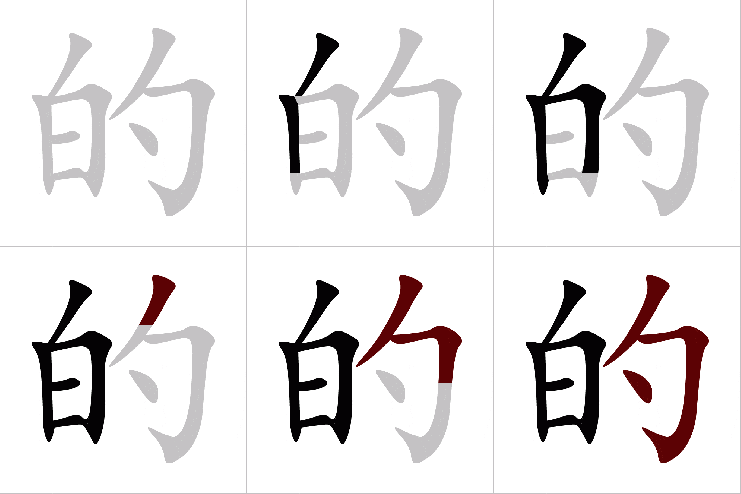
1. 的 (de) of / ~’s (possessive particle) |
| The first character to learn is 的 (de), often used as a possessive particle with a neutral tone. It might seem quite an odd character to begin with, but you will use this one so often, better learn it now. |

Example Sentences
我们的书包是一样的。 (wǒ men de shū bāo shì yī yàng de) Our bags are the same.
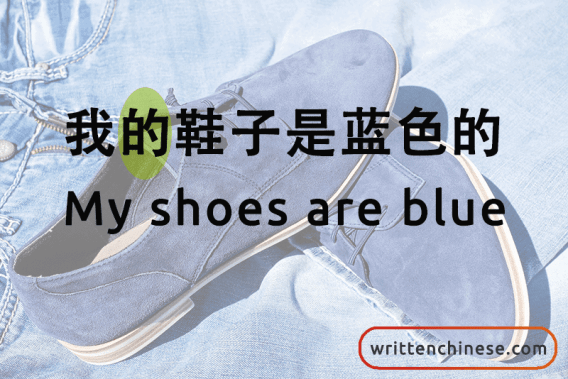
我的鞋子是蓝色的。 (wǒ de xié zi shì lán sè de) My shoes are blue.
More about 的 (de)
You can learn more about the 的 (de) character in our article How to use the ‘de’ particles 的, 得, and 地 in Chinese.2. 一 (yī) one / 1 / a |
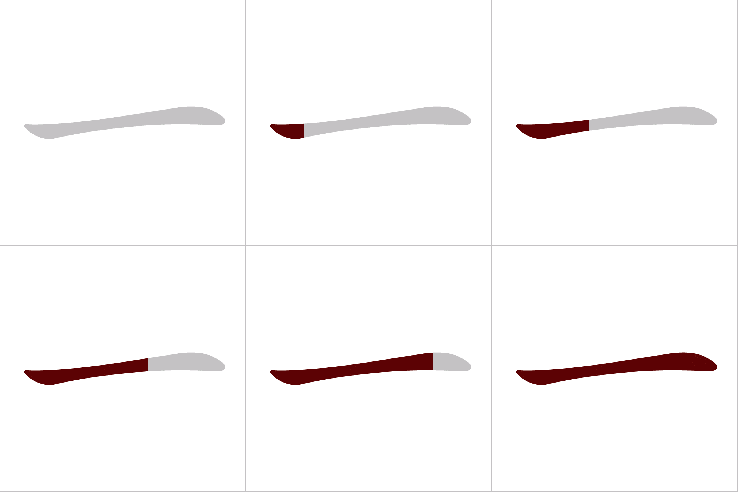
一 (yī) is an ideograph character, meaning that it is an abstract idea of the number 1. |

Example Sentences
我有一个孩子。(wǒ yǒu yī gè hái zi) I have one child.
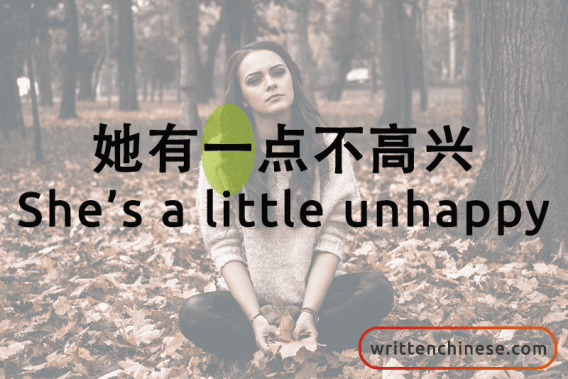
她有一点不高兴。(tā yǒu yī diǎn bù gāo xìng) She is a little unhappy.
More about 一 (yī)
You can learn more about the 的 (de) character in our article How to use the ‘de’ particles 的, 得, and 地 in Chinese.3. 是 (shì) is / are / am / yes / to be’ |
是 (shì) is commonly found to mean ‘is’ or ‘are’ in a Chinese sentence. It can also be used as ‘yes’. |
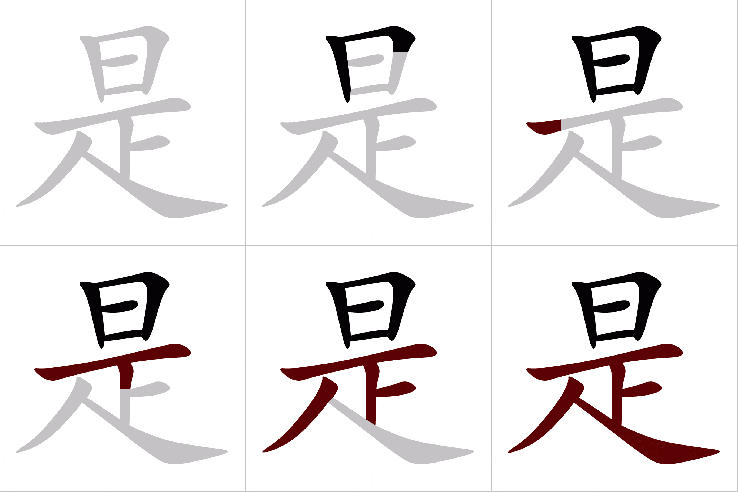
Example Sentences
他是老师吗?(tā shì lǎo shī ma) Is he a teacher?
今天是星期一。(jīn tiān shì xīng qī yī) Today is Monday.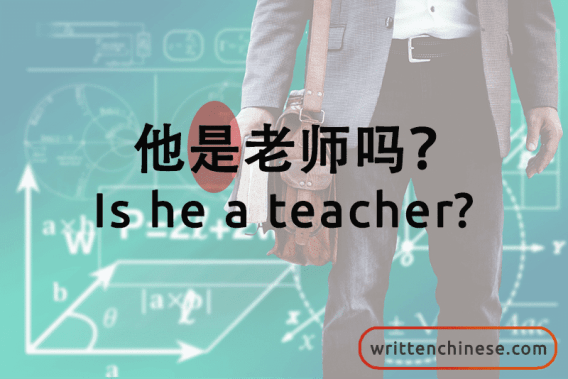
More about 是 (shì)
You can learn more about using the character 是 (shì) in our article about saying yes.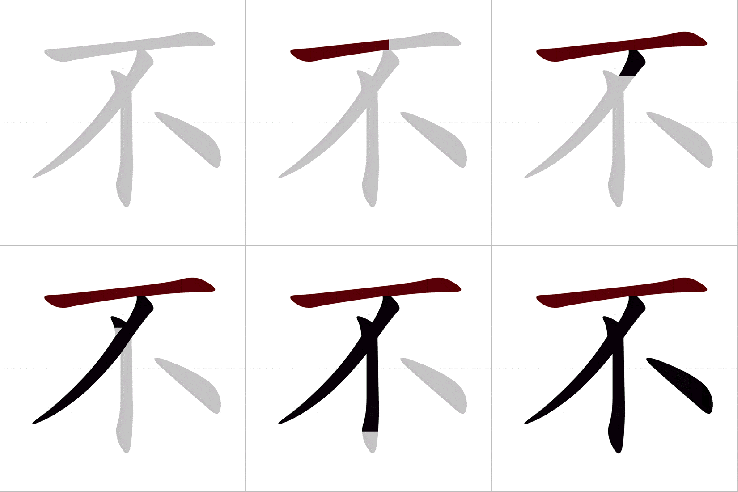
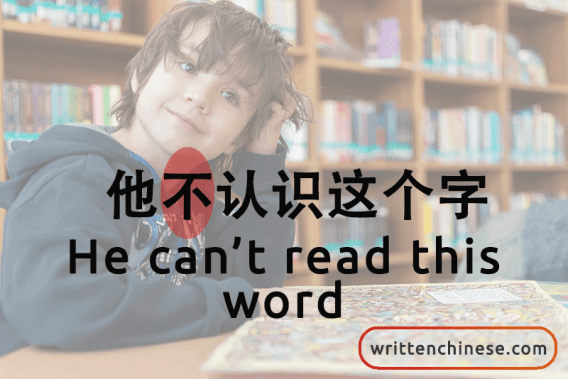
5. 了 (le) completed action marker |
Although 了 (le) can be used in a few different ways, it is most commonly used as a particle to indicate that something is completed. |
Example Sentences
别忘了你的东西。(bié wàng le nǐ de dōng xi) Don’t forget your stuff
我马上到了!(wǒ mǎ shàng dào le) I’ll arrive soon!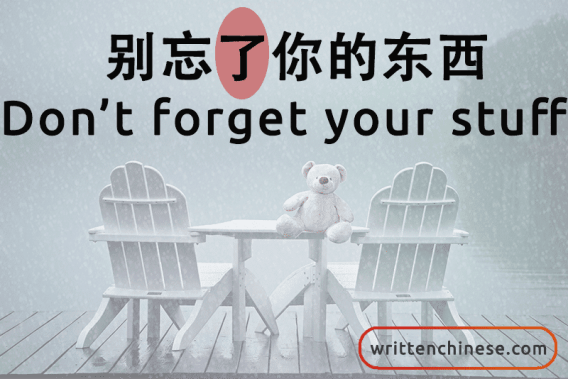
More about 了 (le)
To learn more about how to use 了 (le), take a look at our article The Complete Guide to Chinese Modal Particles, where you’ll find a whole section just on 了 (le) and its uses.
6. 在 (zài) (located) at / (to be) in / to exist / in the middle of doing sth |
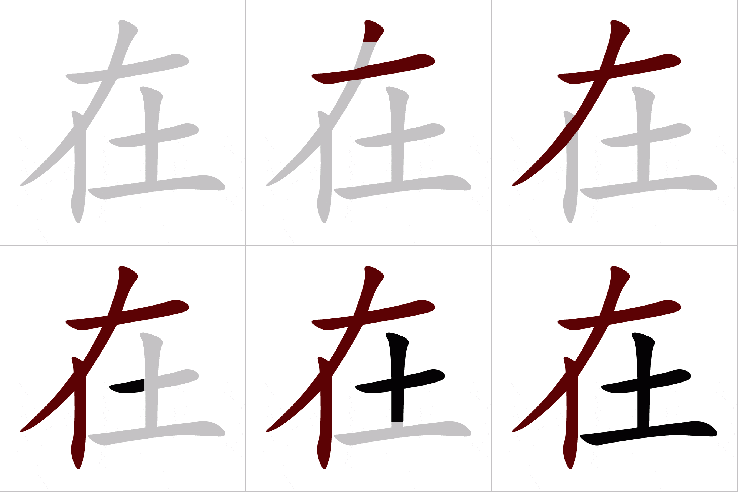
In the development of 在 (zài), 才 (cái) represented a pillar and beam of a house. When 才 (cái) ‘house’ was together with 土 (tǔ) ‘the earth,’ this stood for survival or to ‘exist’.
Alternatively, 才 (cái), which means ‘just now’ or ‘a moment ago’, predominantly makes the pronunciation of the character (cái – zài) but also provides some meaning. I am AT (土) at a place JUST NOW (才).Example Sentences
我正在回办公室。(wǒ zhèng zài huí bàn gōng shì) I’m coming back to the office.
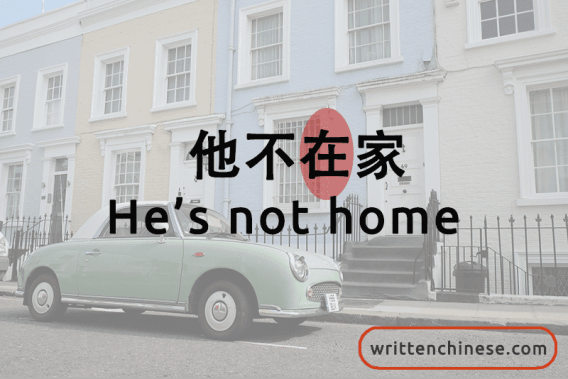
他不在家。(tā bú zài jiā) He’s not home.
More about 在 (zài)
Learn more about using the character 在 in our article, The Different Uses of 在 zai in Chinese.
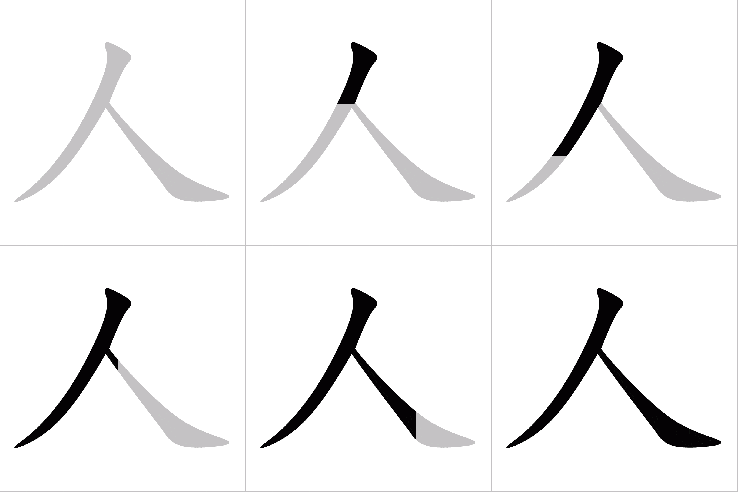
7. 人 (rén) man / person / people |
Example Sentences
这女人很漂亮。(zhè nǚ rén hěn piào liang) The women is very beautiful.
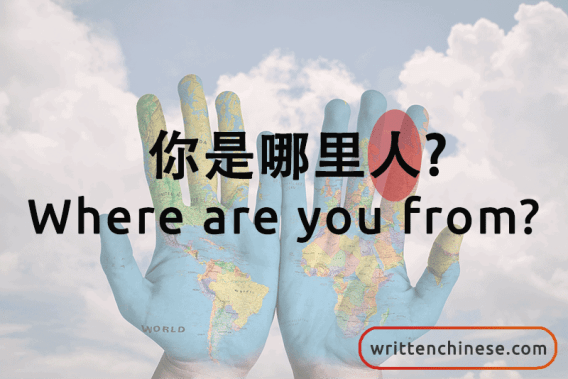
你是哪里人?(nǐ shì nǎ lǐ rén) Where are you from?
More about 人 (rén)
Learn how to talk about people in our article, What Should We Call Friends and Family Members in Chinese?
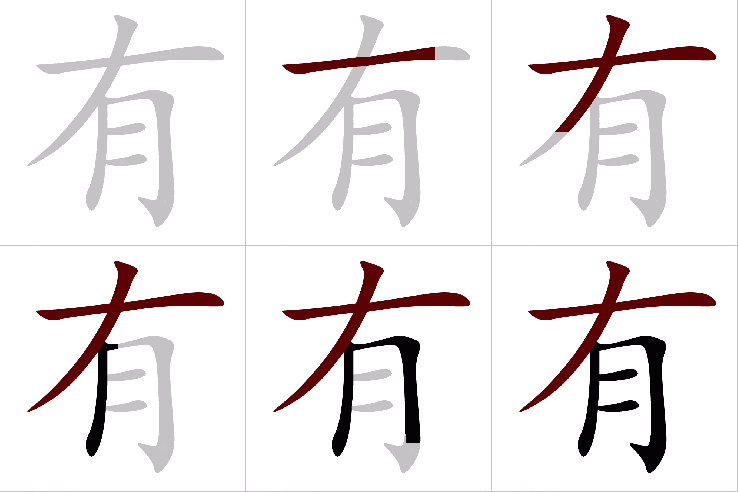
8. 有 (yǒu) to have / there is / there are / to exist / to be |
Example Sentences
这里有家超市。(zhè lǐ yǒu jiā chāo shì) Here is the supermarket.
我只有一张电影票。(wǒ zhǐ yǒu yī zhāng diàn yǐng piào) I only have one movie ticket.
More about 有 (yǒu)
Learn more with these 10 Essential Chinese Sentence Patterns Every Beginner Should Know.
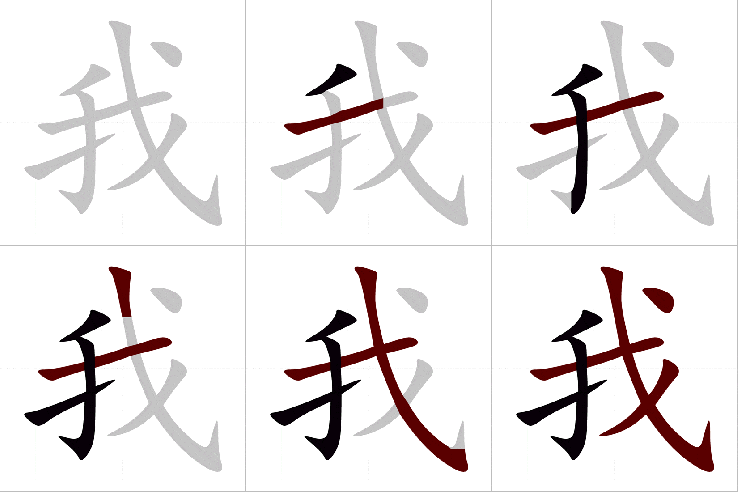
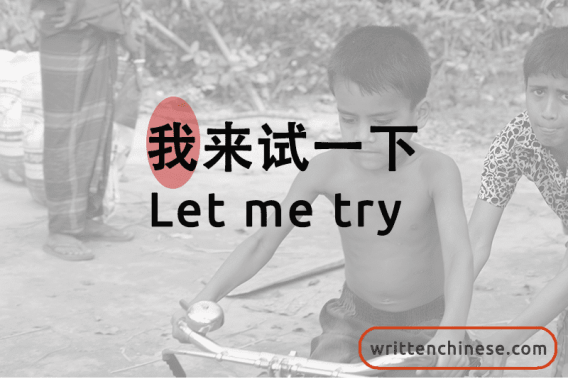
9. 我 (wǒ) I / me / my |
More about 我 (wǒ)
Learn how to use pronouns in our article, You & Me. This & That: Pronouns in Chinese.
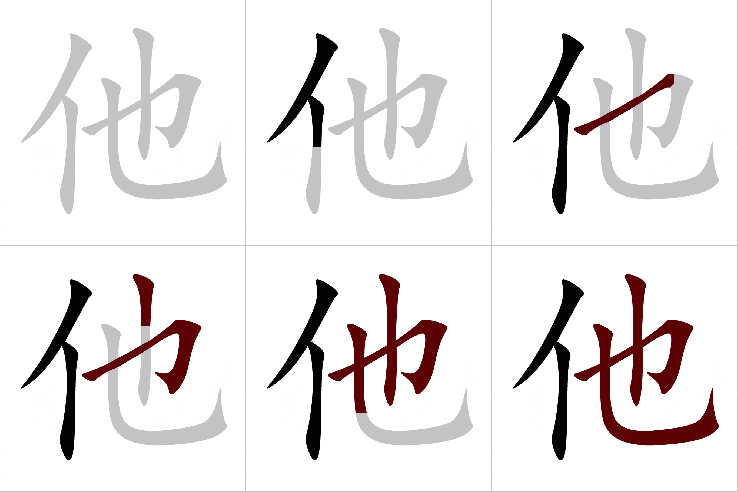
10. 他 (tā) he / him |
Example Sentences
他是我的男朋友。 (tā shì wǒ de nán péng you) He’s my boyfriend.
他是学生吗? (tā shì xué sheng ma) Is he a student?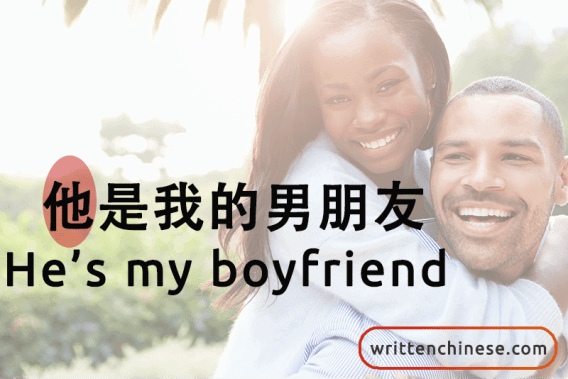
More about 他 (tā)
Learn how to use pronouns in our article, You & Me. This & That: Pronouns in Chinese.
10% Off


Learn Chinese characters, fast.
Practice writing, watch courses and study flashcards from your favorite text books.
Use code WRITTENCHINESE
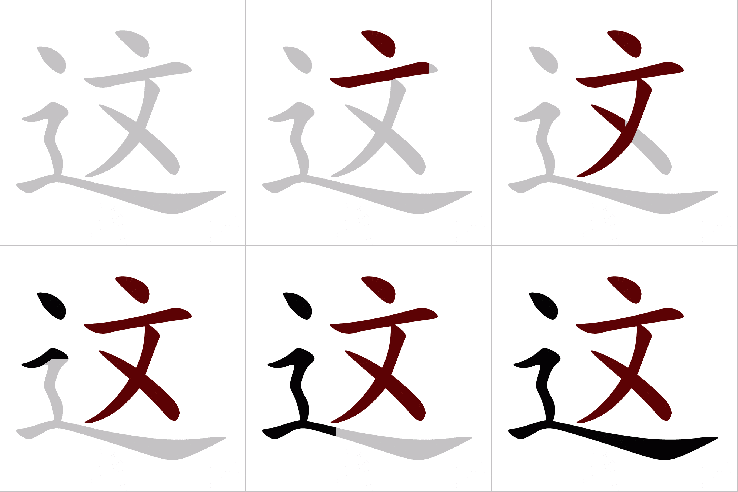
11. 这 (zhè) this / these |
Example Sentences
这是你的书。(zhè shì nǐ de shū) This is your book.
这种菜很好吃。(zhè zhǒng cài hěn hǎo chī) This kind of food is delicious.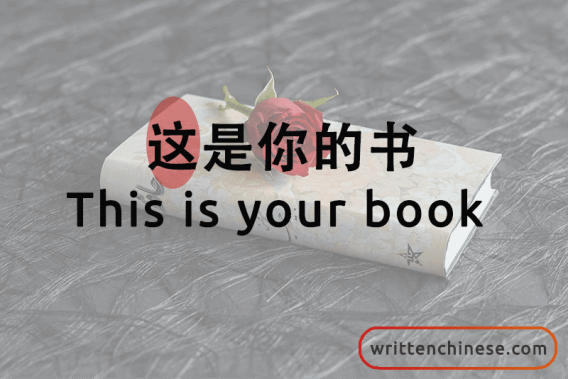
More about 这 (zhè)
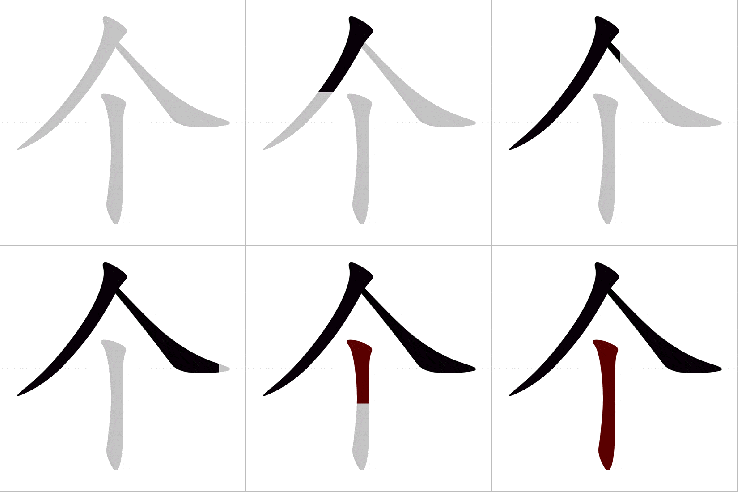
12. 个 (gè) individual / this / that / size |
Example Sentences
小女孩不要这个玩具了。(xiǎo nǚ hái bù yào zhè ge wán jù le) The little girl doesn’t want the toy.
半个小时。(bàn ge xiǎo shí) Half an hour.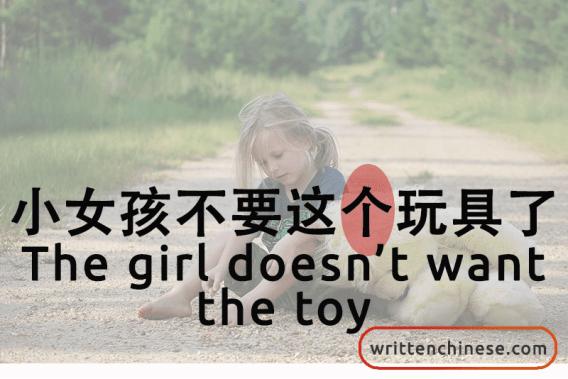
More about 个 (gè)
Learn more about measure words in the article, Weighing Up Chinese Measure Words.
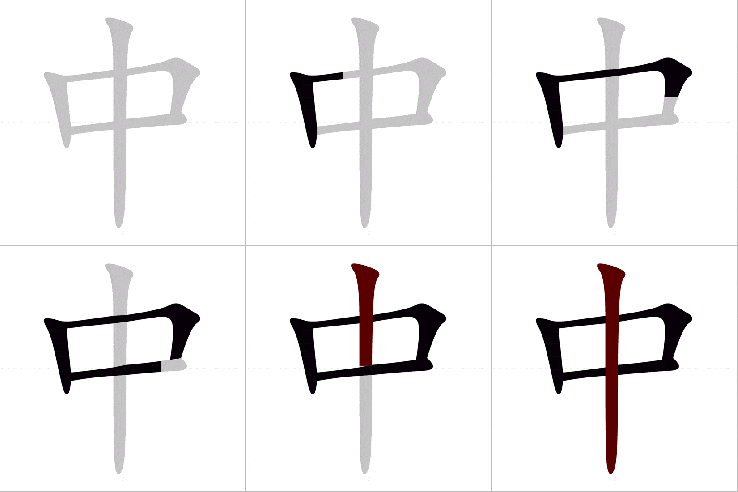
13. 中 (zhōng) China / Chinese / within / among / in / middle / center |
Example Sentences
他回到了中国大陆。(tā huí dào le zhōng guó dà lù) He came back to mainland China.
她的中文说得非常好。(tā de zhōng wén shuō de fēi cháng hǎo) She speaks Chinese extremely well.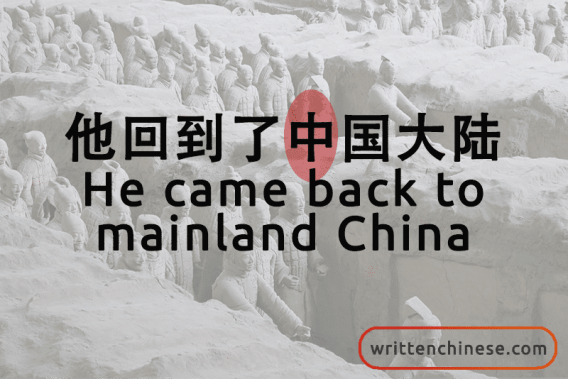
More about 中 (zhōng)
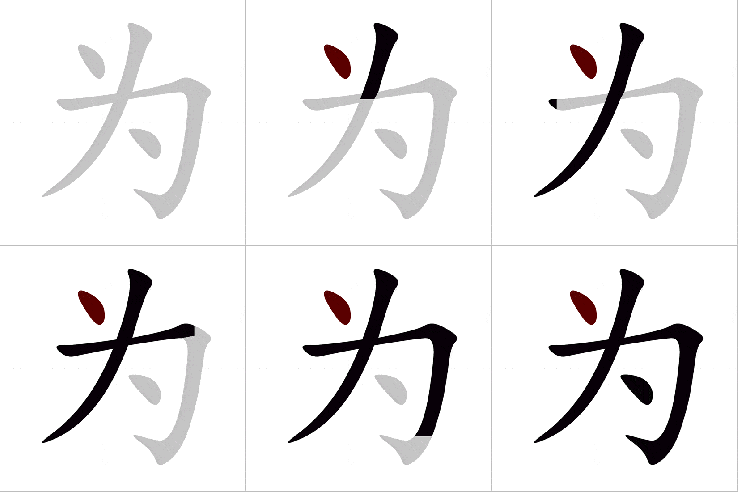
14. 为 (wèi) because of / for / to |
Example Sentences
他这么认为么?(tā zhè me rèn wéi me) Does he think so?
他说这么做是为了我好。(tā shuō zhè me zuò shì wèi le wǒ hǎo) He said he did it for my benefit.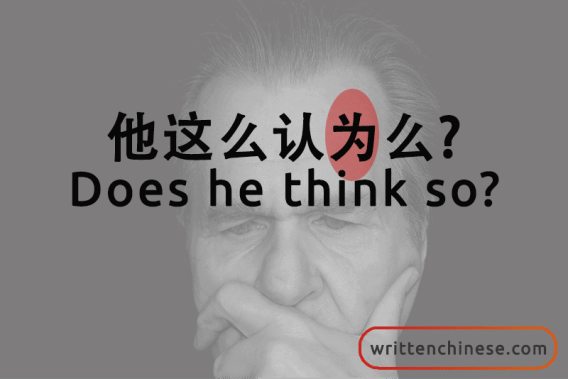
More about 为 (wèi)
Learn more in our Chinese conjunctions article.
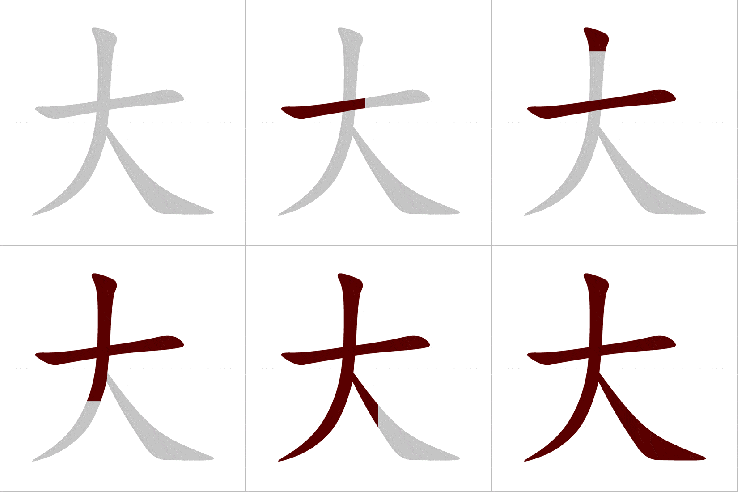
15. 大 (dà) big / huge / large / major / great / wide / deep / older |
Example Sentences
他多大了?(tā duō dà le) How old is he?
大家都很喜欢这次活动。 (dà jiā dōu hěn xǐ huan zhè cì huó dòng) Everyone enjoys this activity.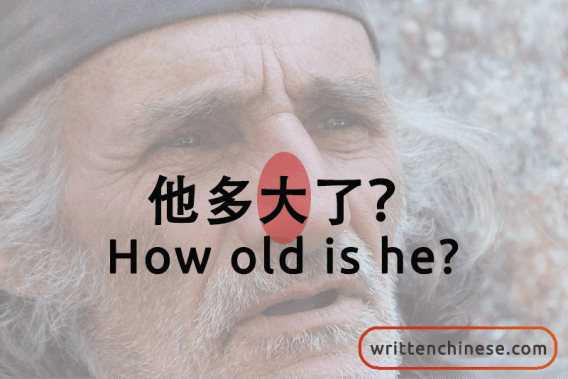
More about 大 (dà)
Learn more in Learn to Read with these 20 Chinese Pictographs.
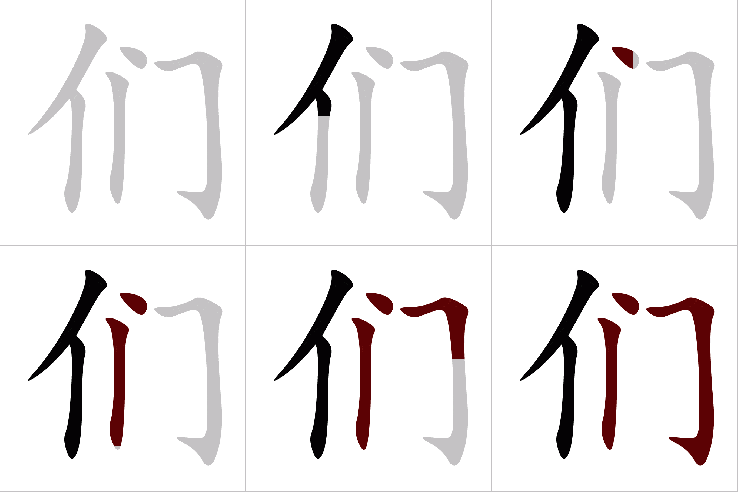
16. 们 (men) plural marker for pronouns |
Example Sentences
你们好吗?(nǐ men hǎo ma) How’re you?
他喜欢有趣的人们。(tā xǐ huan yǒu qù de rén men) He likes people who are interesting.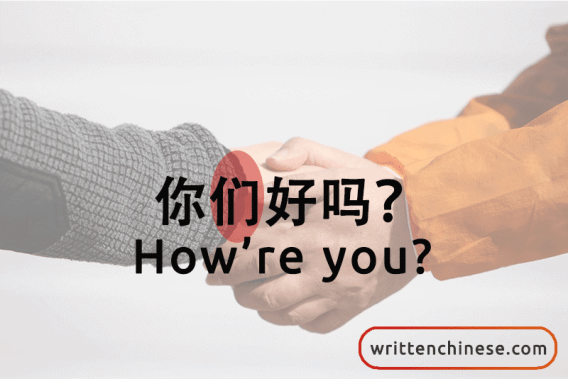
More about 们 (men)
们 doesn't have a distinct sound, but is known as the 'fifth' tone. Learn more about it in our article, How to Use the 5th Chinese Tone.
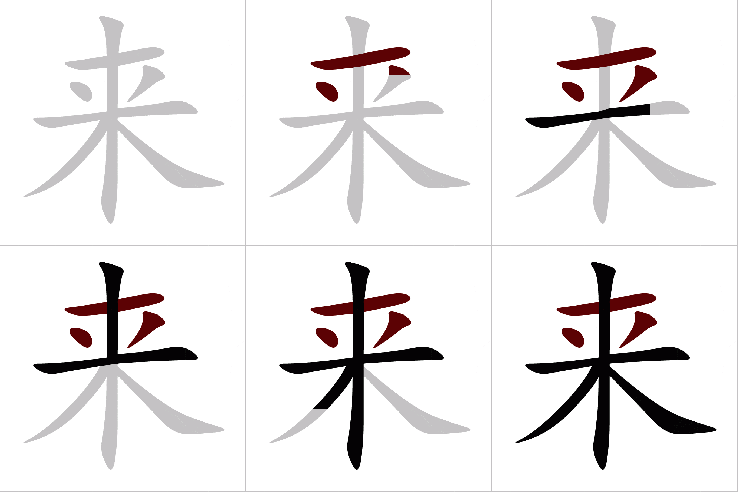
17. 来 (lái) to come / to arrive / to come round / ever since / next |
Example Sentences
晚上你过来吃晚饭吗?(wǎn shang nǐ guò lái chī wǎn fàn ma?) Will you come and have dinner tonight?
他从来没有任何怨言。(tā cóng lái méi yǒu rèn hé yuàn yán) He never has any complaints.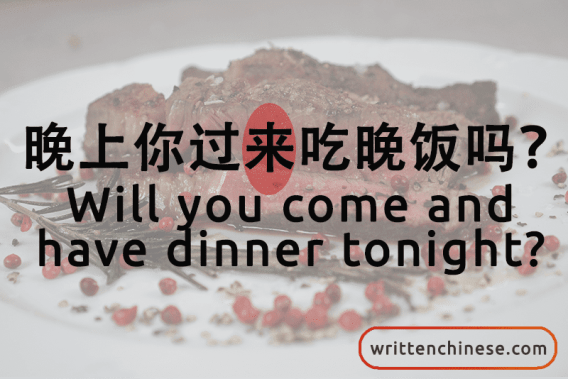
More about 来 (lái)
Learn more verbs in our article, 20 Practical Chinese Verbs You Need to Learn.
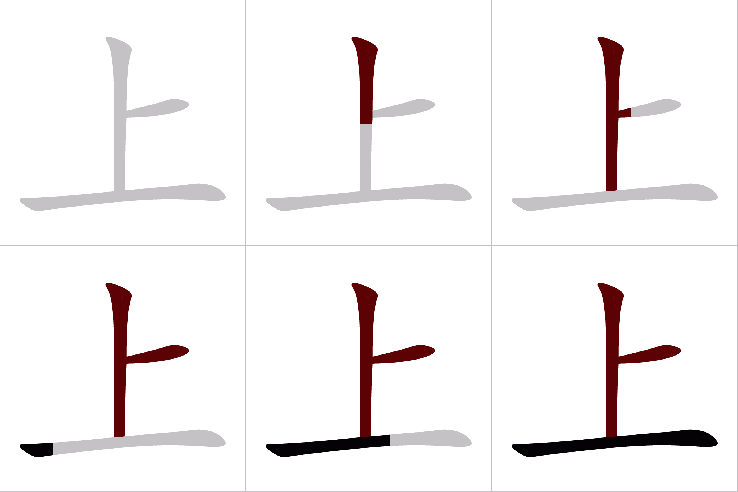
18. 上 (shàng) on top / upon / above / upper / previous |
Example Sentences
上海是个发达的城市。(shàng hǎi shì gè fā dá de chéng shì) Shanghai is a developed city.
书在桌子上。(shū zài zhuō zi shàng) The book is on top of the table.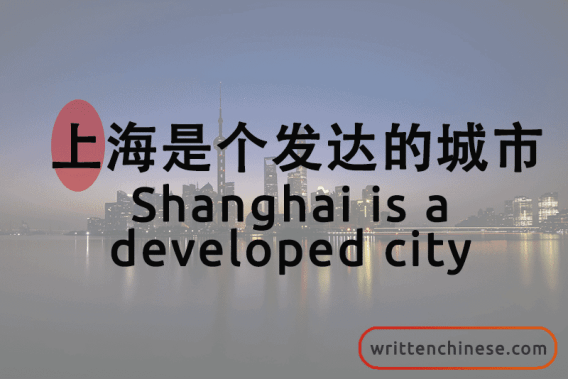
More about 上 (shàng)
Learn more about 上 (shàng) in our article, Let’s Get Abstract With Chinese Ideograms.
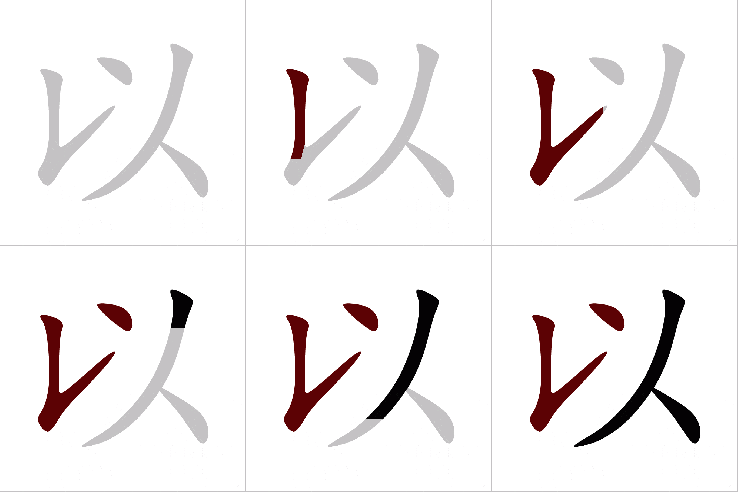
19. 以 (yǐ) to use / by means of / according to / in order to |
Radicals
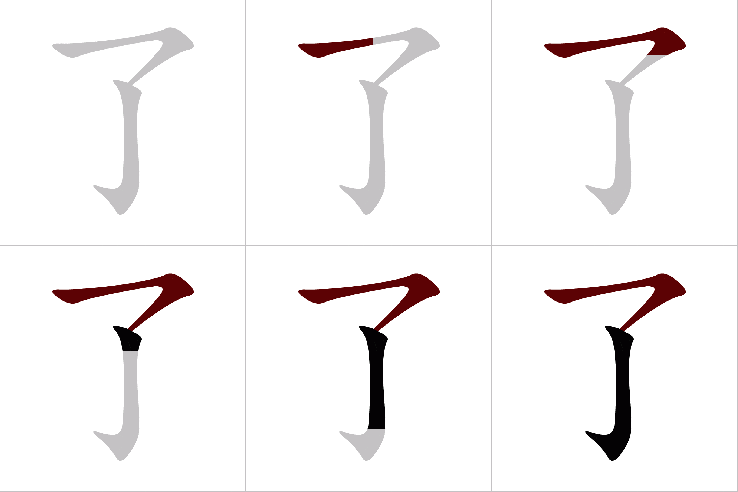
Although 以 (yǐ) is its own radical, it can be broken down further to explain its origins. The right-hand side of the character is 人 (rén) meaning ‘person’ or in this case mother. The origins of this character stem from a mother and baby connecting by an umbilical cord.
Example Sentences
你以前去过那里吗?(nǐ yǐ qián qù guò nà li ma) Have you been there before?
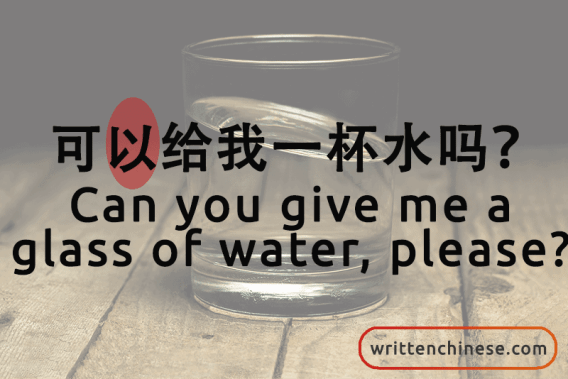
可以给我一杯水吗?(kě yǐ gěi wǒ yī bēi shuǐ ma) Can you give me a glass of water, please?
More about 以 (yǐ)
20. 国 (guó) country / nation / state |
Radicals
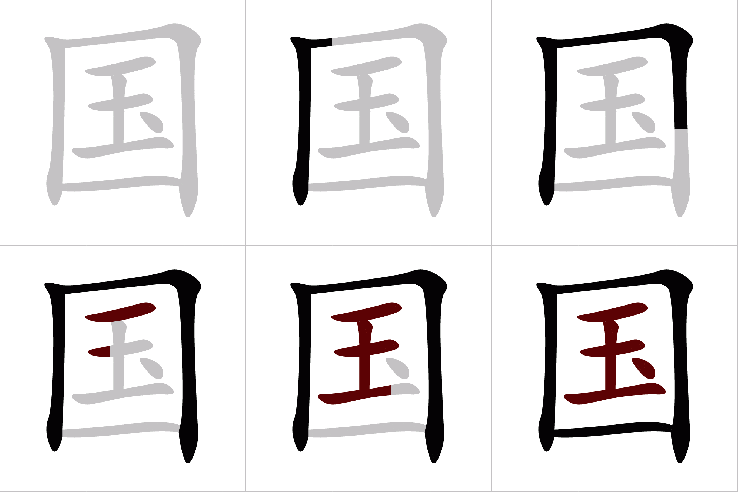
玉 (yù) jade
囗 (wéi) boundary
The traditional character, 國 (guó) is composed of a boundary 囗 (wéi), land 一, mouth 口 (kǒu), and a spear 戈 (gē), all components that a country has. The simplified version 国 (guó) shows jade 玉 (yù), which represents the ‘king’ within a boundary 囗 (wéi), which is a more modern version of a country.
Example Sentences
我喜欢中国。(wǒ xǐ huan zhōng guó) I like China.
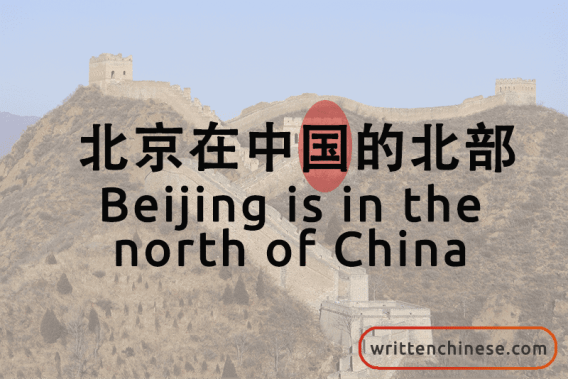
北京在中国的北部。(běi jīng zài zhōng guó de běi bù) Beijing is in the north of China.
More about 国 (guó)